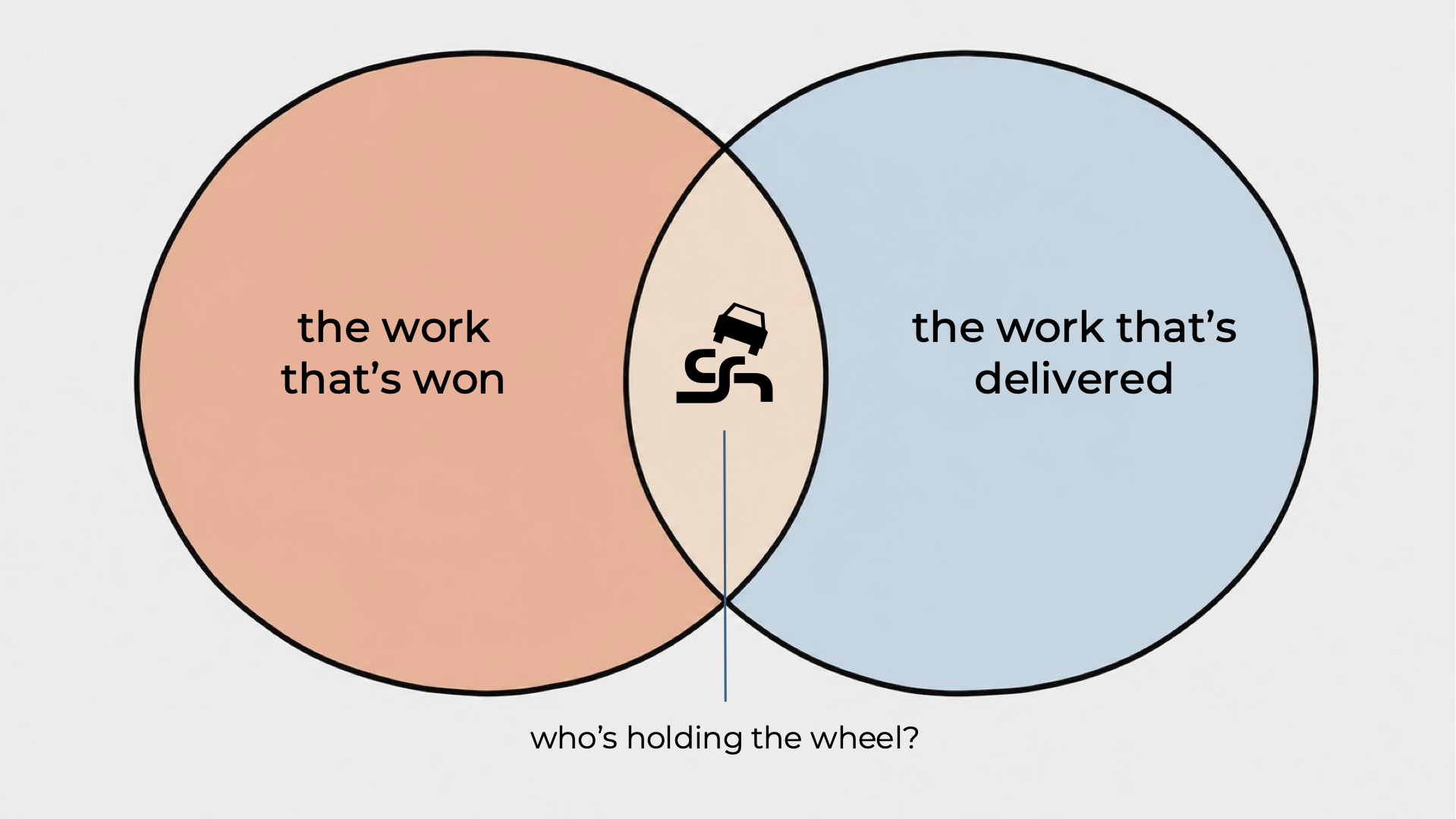
Everybody debriefs the pitch. Almost nobody debriefs the proposal.
Once the work is awarded, the submission that won it starts a quiet second life. Dates shift. A venue changes. An important sponsor arrives late with requirements nobody had scoped. Somewhere around week three, the thing being built is no longer quite the thing that was bought. A gap has opened without anyone deciding to open it and fairly often, it goes unnoticed.
Some drift is inevitable. Briefs are written months before delivery. This region in particular has taught all of us how quickly the ground moves. Change notices exist because change is real. A proposal that survives untouched from award to show day has probably ignored something it should have responded to.
The problem is not that the plan changes: we’re all seasoned professionals and that’s pretty much a given. It’s that the changes are logged individually while nobody stands back to ask what they now add up to.
Each decision is defensible in isolation. Twenty judgement calls, made across four months by different people under time pressure, can quietly relocate the whole thing. Then the post-event review measures delivery against a proposal or KPIs that stopped describing the project sometime in month two, which ultimately tells you very little about anything.
The discipline required is not rigidity. It’s keeping the original intent visible while everything around it moves. What did this need to achieve? Which parts were load-bearing and which were preference? When something is traded away, what replaces it? Who’s looking at the big picture: the agency, the client, the project lead? Or somewhere between all or none of the above?
Flexibility and alignment are not opposites. Losing track of the difference between them is what can turn a good pivot into a slow, unattended drift that everyone believes is still aligned.
Managing drift in the award to delivery gap
Previous
Previous
Evil Twin Theory: what is the other, identical you doing right now?
Next
Next